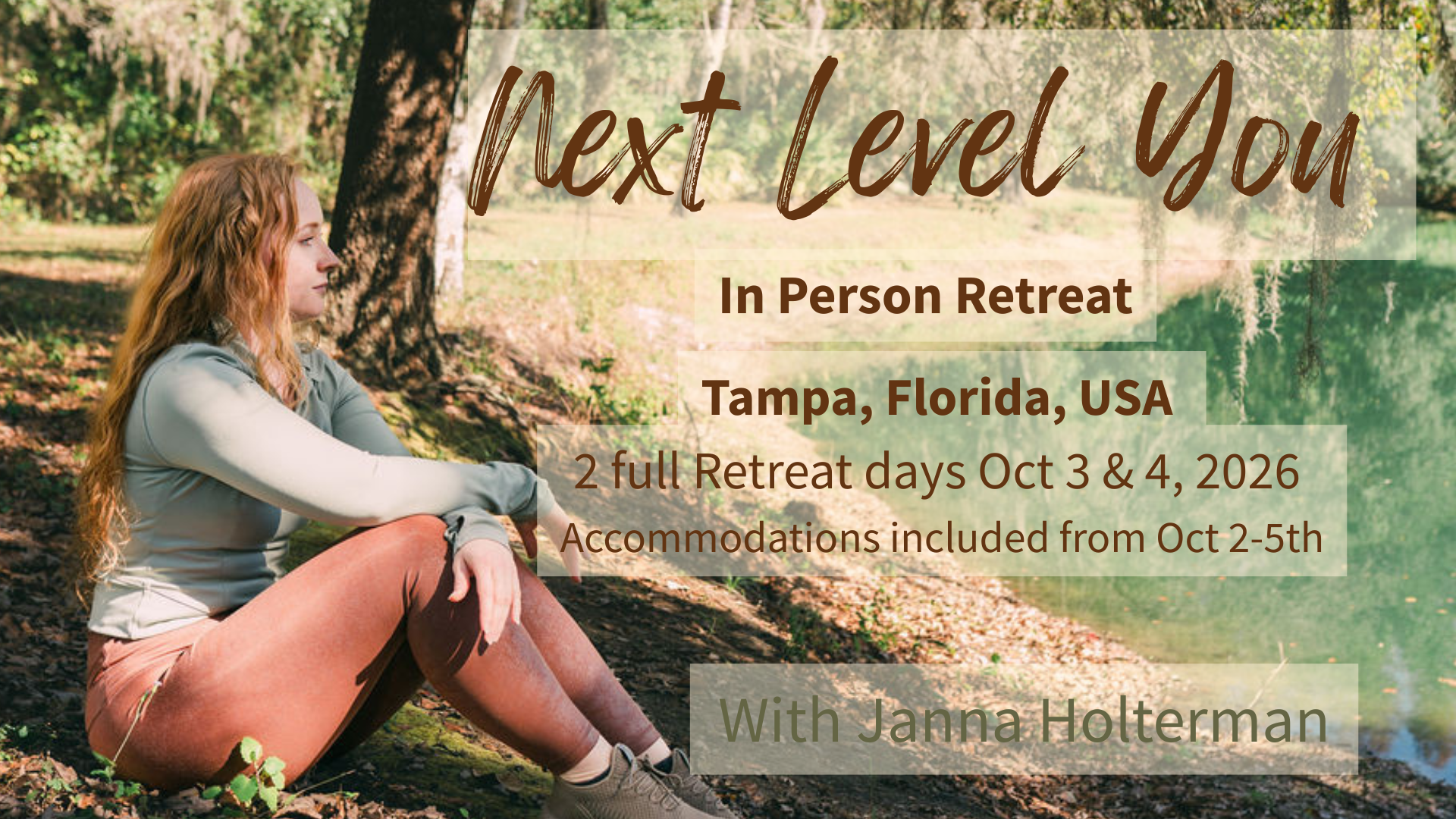
Janna Holterman 0:01
Okay, so that should be all set. All right, any questions before we kind of jump into things? Go with it. Yeah. Remind me, like, what you call yourself, like what you like an embodiment coach, or like what title would you use, anybody integration coach. Okay, okay, all right, so I'll mostly just like let you introduce yourself to give any backstory, and then we can talk a little bit about like kind of what got you into this, and then we'll see where it goes. All right, let me hit record here, all right. right, let's get to it. Welcome back to Unlocking Your More podcast. Today we have a special guest, Natasha. She is a an embodied integration coach. Nope, I think did I get the right? Okay, perfect. So I'm going to let you introduce yourself a little bit, Natasha, and tell your tell us a little bit about you, I'm Yeah, it's very cool. Fun fact, yeah, I Yeah, I Yeah, yeah, yeah. Yeah, yeah, totally, I Yeah,
Natasha 4:16
I'm
Janna Holterman 4:41
Yeah, love it. Yep, yeah. Yeah, yeah. Yeah, yeah, yes, unravels a word I can, I can, yes, I can totally relate to those moments, and then also, just like everything you've talked about so far, I think a lot of it has come, like the understanding has come more retrospectively now. I understand it more deeply if I like go through new things, but something that you said with like identity rupture, that's such an interesting concept. Like, what would you like, maybe even if you want to go from like your life experience of like what does that even mean to you? Was there a situation that that happened, and like, how did it lead you to doing this work,
Natasha 7:02
I Huh, I
Janna Holterman 8:02
I'm sure, yeah,
Natasha 8:10
I
Janna Holterman 8:30
Yeah, I'm Wow, yeah, yeah. Yeah, yeah, I yeah, no kidding. Yeah,
Natasha 10:07
I think
Janna Holterman 10:23
Yes, yeah, I Yeah, yeah. yeah,
Natasha 11:41
mm.
Janna Holterman 11:45
Yeah, yes, yes, entrepreneurship is the biggest mirror to every insecurity or fear you've ever had, yeah, yes, I
Natasha 12:02
yeah,
Janna Holterman 12:22
I Yeah, yeah, that's Absolutely, yeah, I think it's like, as you were talking, I think it's amazing that, like, you know, you can see it now going through, and I can look at my own life and see this too, where there were so many points where I would experience something different, or even just an emotional state, like when I was nursing, I kind of got into a deep state of burnout, but instead of like tuning into me, I tuned into like external things, like I was like, "Oh, well, clearly I need to be fitter, so I went and hired a personal trainer, and I was doing all these things that were like external to myself, and you know, maybe they improved certain aspects and made like marginal improvements, but they didn't solve the burnout problem within my nursing career. They didn't make me feel the way that I wanted to feel in my, like, I, you know, I didn't find the fulfillment or the things that I like, truly was seeking, and I think this is something that happens so much for us, is we're so used to being like, oh well, there's a problem, obviously I need a solution for the problem, and our first instinct is never that we are the solution, it's like I need to go find this external thing, or like in your case, you're like, okay, I got, you know, a baby on the way, I gotta work harder, I gotta make the money, I gotta like check all the boxes, so that I'm taken care of, but I think it's so important to pull back in, like, well, I can take care of myself with all checking all these boxes, but what about like the nervous system, because if my nervous system isn't feeling safe, then, like, even no matter how many boxes I've checked, I'm never gonna feel the way that I need to feel, and so, how, with like, let's get into the embodiment, and like, what does that actually mean, and how do you kind of bring people back home into themselves and Yep, I think
Natasha 15:42
Mmm
Janna Holterman 16:03
Yeah, okay, yeah. Yeah,
Natasha 16:30
yeah. Yeah, I
Janna Holterman 17:14
Cool. Okay, I Yeah, I'm Okay, yeah, I Yeah, yeah, yeah, absolutely. I love it, and the like embodiment movement practices with like music and everything are so incredibly powerful. I do a lot of that because I feel like that's easiest way for me to drop in. So, most of us are literally experiencing life and living neck up, we do not feel in our bodies, and I would say, like the average person, if you went up to them and asked them, like, you know, how many emotions do you know how you feel in your body, it'd be like probably anger, frustration, annoyance, anxiety, sadness, like we're so limited on our awareness about what is happening within our body, so you know, what are some tips that you could offer for kind of like opening that door up for people, because it is a learned skill, so like, how do we start getting more connected with the sensations that are happening in our body, our emotions, and like, why is that important, I Yeah, I Yeah,
Natasha 21:13
I
Janna Holterman 21:31
It's all shut off. I have no idea. Everything is numb. Everything is numb, true. True. Yeah, feelings are not valid. Yeah, I Yeah, I Yeah,
Natasha 23:02
yeah. yeah, I
Janna Holterman 23:39
Yeah, definitely. Yeah, this is, this is so interesting, and I like that you brought it up in that term of like ignoring our basic bodily needs. My background is nursing, so nursing nurses will hold their pee for 12 hours, they won't eat for 12 hours, they won't drink anything, wonder why they have like a pounding headache, feel absolutely awful when they're leaving their shifts, and it's truly like this sacrificing their own well-being for, you know others, which you know at one thing you could be like, oh, that's amazing, and it's inspiration, but also the way we do one thing is the way that we do everything, so if you're training your body that like your needs aren't valid, that even the most basic bodily functions aren't like really worthy of being registered as something to deal with, like, how does that create everything else? So then all of the other, the other messages that we're getting from ourselves, and we are all naturally so intuitive, and our bodies are constantly like giving us feedback about everything that we are experiencing, so when you're shutting off all of these just like basic needs, like eating and having to go pee, and all these things, like it's we're shutting off everything, like we are so incredibly disconnected, and I think that just leads into just making it next to impossible to truly like feel like ourselves to truly like be in a like life existence that we enjoy, because we're just so disconnected. Yeah, of course, I is called culturally set up to make it difficult to meet, you know, meet those things. So I feel like I started nursing in an area that it was more standard to, like, get breaks to go take care of yourself, to do things right on your shift, and then I, you know, moved to another hospital that was like, "Oh, we don't take breaks here, and I'm like, "What do you mean you don't take breaks here? Like, so it was very like, "No, no, we don't do that. And me being who I am, like, I'm like, "I refuse to accept that, like I'm not going to change it for me, I'm going to change it for everybody. So completely changed the culture of that, like, unit, so everybody gets a break, but it's still just like there's so many people who have that, like, oh, well, I have to do this other thing, I have to do this other thing, I have to do this other thing, and nursing is truly a team, team work, even though you have your assigned patients, like, it is a team job, and it is a 24 hour role, so it's not the end of the world if, like, you know, one task didn't get done on your shift. Like, how long does it actually take you to go pee, you know, a minute max, right? Like, how long does it take you to eat, and how much better is your ability to function when you've actually eaten something, because if you're dehydrated, you're hangry, like your brain ain't working, your brain is not functioning, is going to take you longer to do things, and I feel like that recognition, it just makes it a better culture, but there's just so many nursing floors institutions throughout, like North America, because I've worked as a nursing in Canada and the states, like, who it's just part of, like, this, the self-sacrificing is like cultural, and that has to shift and change, but I think they just think, oh, this is the, this is the way that it is, so they have to be able to kind of reprogram that and recognize that, like, actually, when you take care of yourself, you are so much more efficient, you're going to be a better nurse than you were if you didn't take care of yourself, and then also I think the other component of that is of the emotional processing side, like so many nurses are so burnt out because they physically, mentally, and emotionally sacrificed everything that they have, like nothing left to give, that they're in this state of just like numb existence, going through the motions, and then that also slows down their ability to be tapped into their nursing spider sense, like Spidey senses, so they're not going to notice and be able to be at the top of their game that they could be if they were truly taking care of themselves, I Yeah,
Natasha 29:21
yep. yeah.
Janna Holterman 29:44
Yep, yeah, it's generational, right, so
Natasha 30:11
I
Janna Holterman 30:24
Yeah, yes, I Yeah, yes, yeah,
Natasha 31:01
I yeah,
Janna Holterman 31:03
I think it is so important that we kind of recognize that, and ultimately, like, everything is energy, but the strongest energy, the person who is the most rooted to their energy, can have the greatest power to make those ripples, and so most of us are kind of going with the belief systems that have been created from like early childhood or like when we were raised in our career, right? Like, how were we taught when we started it? We're like, this is the norm, but if you don't even know, like, why do we do it? Can sometimes we got to stop and just be like, okay, well, but why? Like, what is this actually, you know, is this actually benefiting something? Is it actually benefiting me? Is this, you know, helping me feel like I'm making an impact or helping me feel like I am fulfilled or enjoying my role that I have chosen most of the time? Like, if it's just the way that things are, a lot of the times it's not. It's not actually the most efficient or the most beneficial, or you know, the thing that's actually helping people. And it does often just take one person to start asking those, like, well, why? Like, what is this actually benefiting? How? Like, is this working? And if they can see a new way of being, and they get grounded and rooted into that, like they can make those shifts relatively fast, because you kind of like the way that we're doing it is not always logical, it's just the way that our brains have like created it, just like you know, most of us were raised with that, like you know, I'll give you something to cry about, like that, which conditioned us to think that, oh, our emotions aren't valid, but, but why aren't they valid? Like, what made them not valid? Like, why would our bodies have this process in our nervous system of creating these sensations and these messengers that are supposed to be telling us, if it wasn't supposed to be, like, if it wasn't valid, why would we have it? It's like, sometimes it's like, oh, well, maybe it does have a purpose, maybe it was just like a miscommunication or mis messaging or a cultural thing that we adopted. So, and I think also we're so easy to dismiss ourselves, but then we turn around and somebody else is going through something, and they're like, you need to process that, you need to grieve. I can tell you that from personal, personal experience, like, you know, my husband passed away when I saw he was 28 I was 26 and everybody was like, "Oh my god, like, take the time, grieve, whatever, but then you turn around and they're like, not letting themselves process anything, and my core situation was massive. It was a huge trauma for me, and I think because it was a huge trauma, I actually felt like I could. I felt like I was allowed to. I felt like I gave myself permission, but then all these other little things that have happened that were also traumatic, I didn't feel like they were big enough to be worthy of processing, to be worthy of being upset or devastated or sad about, like, or even disappointed. I'm like, "Oh, somebody has it so much worse, right? It's so, so interesting, but all of these things are worthy, like, our emotions are there for a reason, they aren't - they don't happen by accident, so even the little thing, even just like if your spouse did something that upset you, that's still worthy of having an emotional response, it's still valid. I think it's so important that we like recognize that, like, and stop like belittling our experiences and saying, oh no, that is actually like I'm having emotional response for a reason, there's a reason I Yeah, yeah, the helping professions very similar, yeah, I Yeah, hmm. Yes, yeah, science is catching up. It's there, is there, is there is stuff that is definitely proving it. There's a lot of really interesting research and stuff out there that is proving just like the the amount of emotions and how interrelated and how it is actually affecting I always like I feel like before I was even into this kind of work with nursing I would always see the same kind of patients with the same kind of diagnosis have the same personal personalities as in like the same emotional experiences and I was always like this is really weird like it's just so interesting that every patient that has this kind of diagnosis has this kind of like you know attitude and I'm like wow like it's just so interesting and then, like, later on, I'm like, now I'm like, oh yes, because the emotional experience was actually what created the physical illness of not processing, and years of build up all of those, but it's just so funny, because I like, before, when I was like very logical about it, I was like, there is, there is a pattern, there is data, I see the data in my own practice that like those were matching up, but yes, there's a lot more research in science that is like backing it up and processing it now. There's a lot of cool stuff I Yeah. Yes, I
Natasha 39:11
Yes,
Janna Holterman 39:16
yeah, I Yeah,
Natasha 39:34
I think
Janna Holterman 39:43
Yeah, yeah, so I think this is all kind of leading us back into coming back into ourselves. So, how do we come back into ourselves when our, you know, society and world is pointing us externally? Like, how do we bring everything back into us, checking in with our internal compass kind of thing,
Natasha 40:22
do Yeah, I think Yeah, I think
Janna Holterman 42:23
Yeah, I'm Yeah,
Natasha 43:20
yeah, I very,
Speaker 1 43:33
yeah,
Natasha 43:33
I Yeah, I
Janna Holterman 44:36
Know that all that all right. Is there anything else you feel would be important to share before we wrap up I Yeah. Yeah, yeah, yeah, I think it's, it's, it truly is like the only way to create sustainable results that you actually want is by going in out versus outward in. Okay, well, how do people find you? They'd like to do Perfect, and we'll post all that in the show notes. All right. Thank you so much for being here. I think this was a really great episode, kind of expanding people's understanding about going within. So beautiful,
Natasha 47:42
thank
Janna Holterman 47:45
All right. Thank you very much. That was great. Absolutely, yep, perfect. No, I really like the embodiment work. I definitely feel like emotional processing is something that I do a lot for myself personally, but then also with clients. But I go at it more from like the intuitive lens of figuring out like what the brain, like what their limiting beliefs are, and then like also what emotions are like wrapped up in that, so that we can like release the emotions while reprogramming their brain. So, yep, absolutely. Okay, so this will probably be posted, maybe next week. I think two weeks is probably when it's going to be posted, and I think you already sent me your links and everything, right? Way back, or maybe. Yeah, pretty sure you did. Yeah, like I think you sent them, like, originally when we first talked. So I think they're, yeah. So I should have all that. And then, do you want copies of everything I can post it on YouTube. Yeah, sure, yeah, we can do that. I am.. I do not.. I'm not very active on it, but I exist. I exist in the LinkedIn world, not very actively. Okay. Yes, you, it's my name, I'm my name is on everything, all of the social medias. It's just, it's just my name.
Natasha 49:48
Yep,
Janna Holterman 49:59
sure, we can do that. Yeah, yeah, absolutely, I Okay, yeah, you can. You can send me the details about it when you get them all figured out, yeah.
Natasha 51:29
Okay.
Janna Holterman 51:43
Okay, yeah, yeah, definitely, yes, yep. Generally, I don't, I actually don't visit that much. I normally visit like once a year, kind of thing, but my parents, my parents are snowboarding now, so like they've been coming down for the winter for the last two years, so it's like much easier, because I'm like they're here for like at least four months every year, it's good, yeah, yeah, yeah. Well, because I moved down here, and then my brother moved down like the year after me, so like it's just the two of us, so we're both down here, so they're kind of like stuck, but yeah, yeah, absolutely, yeah, me too. All right, take care of yourself, definitely, you know, keep me connected in the loop, always, you know, want to support one another, kind of thing, see ya.
Natasha 53:38
Oh, this.