Janna Holterman 0:00
All right, welcome back to Unlocking Your More with Janna Holterman. Today, I'm really excited to be talking about results dysmorphia, and this is something that I have noticed within my own life, and kind of was like, what the heck is going on. What basically results dysmorphia is, is the is the inability to accurately and clearly see the results that you are actually creating in your life, just like if you were to have body dysmorphia, where you could be looking at your arms and your arms look bigger to you than they actually are, or smaller to you, right? Like, it is not the inability to accurately see our body the way that it is. It's the same. It's basically the inability to accurately see the results that we are creating in our lives. In results, I, you know, this could be you in your career having certain financial or, you know, title goals, it could also be wellness goals, feeling your best, getting a solid sleep, you know, being at a your optimal weight for your body. There could be so many different results. It also just could be like you being like, you know, what I feel like people don't respect me. I want people to respect me more. That could be a goal that you have. So, the things that you want in your life, basically, when you feel that you're not creating them, you feel that you know things aren't happening, you're doing everything, and nothing seems to be working. Nothing seems to be changing the situation. I went through this for so long in multiple aspects of my life, but I felt like it was really strong in my business, of feeling like I wasn't creating the income goals or the client goals, or getting even like free classes, like if there wasn't the people, the number of people that I wanted to sign up for that workshop, like you know, that was the kind of thing where I felt like I wasn't creating the results in my business that I expected to see, and I think expected is something that's really an important thing, right, because a lot of the time this is what I noticed for myself specifically, and I see this so many times in other clients too, where they're like, okay, I expect, and you might not have verbalized this, but you might be thinking it, right, like our brains get to work, we have a new goal, we have a new thing that we're setting out towards, and then our brain gets to work on how we think it should go, right? So our brain creates expectations, and here's the thing that I noticed in myself, and I've seen this in so many of my clients who are high achieving women who are also really hard on themselves. You set up this expectation of how you think it should go for your brain, and what happens is things don't go the way you expected to them on the first try, and then you're like, well, I fucked up, somebody else fucked up, but clearly there's a problem, I'm probably the problem because that didn't, I didn't create the results that I wanted, and it is definitely true, where a lot of the times we have, you know, I set the intention to make an extra $1,000 this month, say that could be it, right, and then I only made $500 but here's the problem with our brains and the way that our brains see things, our brains do not see the fact that we made $500 and how amazing that is. Our brain sees the fact that the gap our brain sees the 500 to $1,000 that we didn't make, and what our brain does is it finds a bunch of evidence to reinforce and really come up with reasons why we fell short. Why was there that gap from what our goal was and what we actually created? And these are not productive evidence, right?
Janna Holterman 4:15
Like, this is like, well, clearly you're not good enough, you're not worthy enough, nobody likes you, like that kind of thing is what your brain will find to fill that gap to justify to itself why you didn't reach it, because our brains always want to be right, so if our brain isn't right in that its expectation wasn't, you know, what reality was wasn't meeting what its expectation was, it is going to generally use you, unfortunately, as the scapegoat and beat the crap out of you, and so what this has done is it's conditioned our brains to not see results that we have created unless. Actually met what our expectation was, so if you had the expectation of losing 10 pounds, but you worked really, really hard and you only lost two pounds, your brain is like, well, see, you're a fatty, see, you ate that chocolate chip cookie last week, that's why you know you missed one day at the gym because you were sick, that's why, right? Is that actually true? No, is one action going to make or break you in any situation and scenario? Almost never, right? Like one single cookie is not going to make or break you, one single day missing the gym is not going to make or break you. The problem happens when we take those one single thing, and then we're like, I'm just gonna throw it all away, it doesn't matter anymore. So I have celiac disease, and of course I have to eat gluten free, and one I was looking, there's this like find me gluten free website that's just helpful to look at, like especially when you're traveling websites that have gluten-free options, and if those gluten-free options are like celiac safe versus just like a lot of time, what happens is they like cook the, you know, if you had pasta, they'll cook it in the same water, so it's technically contaminated, even if it's gluten-free pasta, it's still contaminated, and so I was looking at this website, and there was a guy who wrote his comment, being like, the restaurant gluten me, and I start reading his comment, and he was like, well, the restaurant served me bread on the side of my meal, and so the rest of his meal was probably gluten free, but because there was bread inside of it, he was like, "fuck it, I've, you know, I'm probably contaminated. So, what did he do? He ate the bread, and then he contained that, complained that he got sick. This is what happens, right? We're like, okay, there might be a problem. I foresee that, like, you know, they put bread on the dish, the rest of the dish was like, you know, chicken and rice and veggies, those shouldn't be like it should be gluten free, but there was bread on the side of it, so instead of saying something, instead of, you know, doing anything about it, he was just like, well, if they mess this up, they probably mess up the whole thing, and I am gonna throw myself under the bus by eating this entire piece of bread, and then getting super sick and blaming it on the restaurant, but this is what happens, right? We're like, oh, this one thing went wrong, so therefore the whole throw the whole thing out the window, it's clearly, you know, wasn't meant to be, but we've conditioned our brain to be this way, the good news about this, I'm not telling you this so you, I can point out all your like fatal flaws, or like, oh God, how does she know this is totally me, I do this stuff all the time. No, I'm not pointing it out so you can beat yourself up. I'm pointing this out because our brains were conditioned to be this way initially, right? Like, our brains were conditioned to ultimately it comes a lot from instincts, because if you're facing a lion and you're in the wilderness and it's like hunter-gatherer caveman times, right, like you're there's a lion in front of you, one misstep, you could snap a trip, a twig that's gonna catch the lion's attention, and that lion's gonna come after you, right. So this is why our brain focuses that way.
Janna Holterman 8:32
You know, you could be out gathering food and pick the wrong mushroom or plant, and you could be sick and poisoned, and potentially die. Right, this is the way that our brains were programmed at this like deep subconscious nervous system level in our current society. Not necessary, right? Like, it's not necessary to have that level of scrutiny, and all it's actually done is just constantly created this fuel for us to beat the crap out of ourselves on an ongoing, on ongoing basis, and create this dysmorphia when it comes to our results, where we can't accurately see our results, because all we are focusing on is where we fell short, all of the things that we didn't accomplish between here and our goals, and the thing is that even if we accomplished our goal, say we, you know, wanted to lose that 10 pounds, we actually lost the 10 pounds. Our brains are creatures of habit, so what we focus on, we create more of. So, even if we reach the goal of losing 10 pounds, our brains are so hyper fixated on finding all the evidence of where we fell short, or all the problems that we have. Normally, we're going to just continue to beat ourselves up, or find something else, or maybe we lost the 10 pounds, but we still can't fit into those blue jeans that we absolutely love. Oh, or that dress that we brought for so and so's wedding, and we want to be able to wear to this other event, still can't fit in it, so clearly I'm not good enough, right? Like, our brain is just gonna fixate and find something else, so you might have a momentary high of actually reaching that expectation, but generally, because we are just so conditioned to be such toxic bitches to ourselves, it's just gonna go back to finding that problem over and over again. So, again, I don't tell you this to just beat yourself up. I don't tell you this, so you're now hyper aware of the fact that you beat the crap out of yourself, because I was also a person who was not fully aware of how hard they were on themselves. So, but I tell you this because the more you understand your brain, the more you understand your nervous system, the more you understand your emotions, the more power you actually have to change them. So our brains are neuroplastic, which basically means that they're moldable, they can be shifted and changed and evolved into something different, so if you want to feel like you're constantly making a difference, that you're constantly getting the results that you want in your life. And here's the thing, our the way that our brain sees the like our lives, and how fulfillment is actually created, right? Fulfillment is actually created from our brain seeing the evidence of how we're creating the results in our life that we want. So, if you're not focusing on how you're actually creating results in your life that you want, it's going to be impossible for you to feel fulfilled, because your brain isn't like meeting those cues that it feels that are necessary to have the emotion response in your body that is fulfillment, so the more you understand this, the more you can learn about this from those that perspective of how does my brain work, how does my nervous system work, how does my emotions work. We can bring those all together, and you can actually like feel your best. You can create things that you want to create in your life, and you're going to feel a lot better. You're gonna have more energy, more capacity, because you're working with yourself rather than against yourself. And when we work against ourselves, we just have more ammunition to continue to beat ourselves up. So, how do we start shifting this result dysmorphia, where we're not accurately seeing what we're creating, because we're so fixated on where we fell short. We actually have to train our brain to focus on the results we have created. The, you know, I wanted to lose 10 pounds, and I only lost two. We need to focus on the two pounds that is some something somehow you were doing correctly that actually helped you move the needle towards your goal.
Janna Holterman 12:49
And here's the thing, the more we beat ourselves up, how much do you want to do something right? Have you been in a situation where somebody's being like super rude and disrespectful to you, but they're asking you to do something. How much do you want to do that thing? You're probably like, I want to scream and yell at them and get the heck out of here, right? And then we expect ourselves to be able to function at like this high level capacity when we are like screaming and yelling at ourselves, see how it doesn't like it doesn't even make sense, but this is what we have to see. We like the more we pointed out to our brain, and we can actually start to shift it, because if you can start catching your train of thought, where you're like beating the crap out of yourself and telling yourself that it's not enough, or you should work harder, and you need to do xyz more, or comparing yourself to Sally Jo, because Sally Jo went and did this one thing, and then, like, she got everything that she wanted, her life. Yeah, when you notice, right, this is the huge thing: awareness, noticing your brain going down those rabbit holes. We want to stop it, like a slight little slap of the face just to like startle you enough to be like whoa, because when we stop our brain and redirect it somewhere else, so our brains love to tell stories, but if you stop the story, you stop that train of thought, your brain is like, oh well, she didn't like that story. Our brain wants the stories that we can get into. So every time you are having a train of thought, when your brain is telling a story, a narrative, you are living that situation as if it was currently happening. Your brain can't tell the difference between something that we think in our head, and the reality of the situation, our brain also can't tell the difference between us watching a movie or reading a book and reality. So, if you're watching some scary shit on TV, it's going to be freaking you out, and your brain is going to be activating your fight-flight nervous system, and it's going to be a lot on your body and your brain, because your brain can't tell. The difference between reality and not, so when we understand that, but what happens is we pause the train, we're like, whoa, splash cold water on your face, stop thinking that way for a second, we want to redirect it somewhere else, because the more times you stop a train, and if you have the same sad story that you tell yourself on repeat. Stop it, stop it. Pause the train, and like, be like, okay. Well, is that even true? Right, that this is my like favorite question after, like, is this even true? Is this reality? Is my perception of this situation actually factually true? 99% of the time it isn't. Okay, well, what is actually true? How do I find evidence for what is true, and a lot of the times that's where I go to, okay, well, what have I actually created? Okay, I've lost those two pounds, my goal was 10, but I lost those two pounds. How fucking incredible is that? What did I do that made that happen? How did you know? How has my tenacity, how is my capability, how is my ability to show up actually helped me create that two pounds of lost weight, and what starts to shift is your brain was like, okay, well, she interrupted me when I was in this story, so that story must not be good. So, what actually happens is it starts to starve those neural connections, so those neural connections get smaller and smaller and smaller, and when your brain is thinking of, like, how do I handle this situation? What do I think in this like gap of time? It will choose these strong neural connections. So, if you start starving those neural connections of the pity party stories, or the like, you know, how I'm not good enough story, it's going to stop choosing it over time, and it's going to start choosing these stronger neural connect, stronger, stronger neural connection.
Janna Holterman 16:42
So, if your strongest neural connection is that, like, you know, what did I actually do to support myself, and how am I actually creating this, and how amazing is it that I get to create this in this situation? Or, you know, I, you know, one of my highest values is being a really good friend, and I, you know, went and hung out with my friend, and, like, we really connected, and I like felt like I just like got so much out of that interaction. Beautiful, right? Like, how are you stopping that train and redirecting it to, you know, is it even true? What is true? How are you like, how capable are you? What is possible for you? What are you already doing that is helping you move to the needle towards your goals. The more you focus on those things, the more you're going to actually change the way that your brain is wired, so you're going to feel a lot better because you're actually focusing and finding evidence for the results. The more you focus on and find the evidence for the results, the more motivated that you're going to be to continue to create more results, because if you're telling yourself that it's not good enough and it doesn't make a difference anyway, right? How much are you going to want to continue doing it? You're not, but if you're like, oh my god, like, look at how much progress I've made, I've already, you know, shifted this much, I've already learned this much, I've already got the muscle memory down to in the body mechanics to be able to do this thing, like, how much easier is it now? Like, the getting started is the hardest part now. It's just momentum. Now we're just gonna, you know, keep this going. So that is the hugest thing, is really starting to shift the way that our brain is seeing it, focusing on what you have created, and even if you've created nothing at all towards a goal that you've set for yourself. What are skills and qualities that you have that make you the perfect person to achieve that goal? Like, what kind of tenacity do you have? Like, what kind of, you know, communication skills or perseverance or just willingness to show up and try, right? Maybe you're just like, I'm a fuck around and find out, or like, okay, that's so needed. We need that. That is the perfect kind of quality that the person who's going to achieve the school has. That is how you can start finding evidence, and what that's going to do is instead of the body or the result dysmorphia, where all your brain is focusing on is the things you haven't created. It starts to shift and actually see the results that you are creating. And here's the thing with results: when we want external things in our lives that are going to last, that are going to be sustainable and maintainable for us. We have to change the way that our brain thinks. We have to make it feel safe for our nervous system, and we have to have emotions that are aligned with those things. And I know that sounds like a lot, but it does take time to do those things. So, even if you just implement what we talked about today, of shifting the focus to what you have already created and seeing how those results are happening, what what you create, you, you, what you focus on, you create more of. So, if you focus on what you are creating, your brain is going to find more evidence, and it's going to be a lot easier to create those new things, right? Because you feel better, so while. We are doing this for ourselves. It is a process we have to take the time to reprogram it, but it's not something that's going to be instantaneous results.
Janna Holterman 20:12
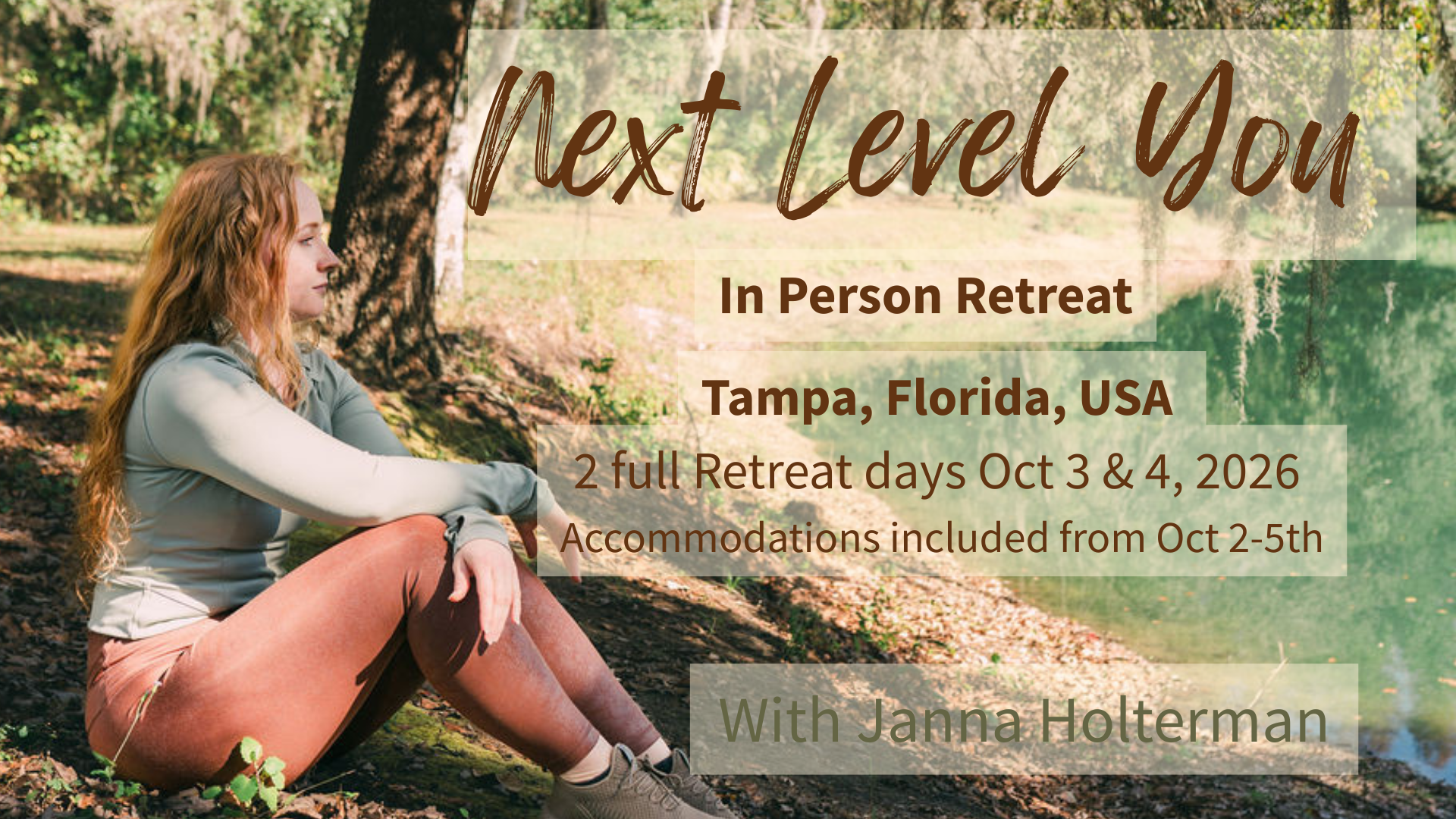
You might shift a belief system, and then the next day get, get, like, you know, something that happens, you know, like, "Oh my god, it's working, and then you might have, like, a cold spell, where you're like, okay, well, nothing's nothing's changing, like everything's plateaued, like, what the hell, like it takes time to really build those new belief systems, regulate your nervous system, and get the emotions behind it, so do not give up, right, it's, it is like having an old-fashioned water pump that is like going into a well, and one of the ones that you've probably seen in movies that you have to like hand crank, and once you start pumping, pumping the water pump to get like it, it requires pressure to bring the water to the surface, if you pump it once or twice, there's not enough pressure to bring that water all the way to the surface from deep in that well, and so you have to continue when no results are happening, but we trust that there's going to be water that comes, we have to trust that the results are going to come, but we're doing that deep underground work, that pressure building of reprogramming our mind, creating safety within our nervous system, and the emotion will work to get aligned with it, and then eventually the water is going to start coming, but it's going to start with a few drops, and then a trickle, and then a slow stream, and then the water is going to be coming with force, but we can't give up before we actually get enough pressure under the ground to actually create the sustainable results that we want externally, and this is where so many people give up. They're like, well, it didn't work, I didn't create what I wanted, or I created what I wanted once, and then I didn't continue to see those things. So trust that it takes time, and we have to give ourselves that grace and the time, and to continue to find the evidence on repeat until we do it non-declaratively, and that basically means it's just the way that you are, which happens when we have built those new neural connections, and they are the strongest neural connections, so it's just the one that your brain automatically chooses, you don't have to try anymore, because it's just going to choose that new neural connection. I hope you enjoy this episode of Unlocking Your More Podcast. I want to take a minute to talk to you about Next Level U. Next Level You is a in-person retreat that I am going to be hosting in October 2026 This is going to be a two full day retreat. You're gonna come in on a Friday. We're gonna do retreat day Saturday, Sunday. You'll leave on Monday. This will be in person, a small group, maximum will be nine people, so including me. There will be 10 of us, all in a big luxury home where we will dive so deeply. The first day, you're going to shed apart all of the things that are holding you back in maybe that you know constantly beating yourself up. How are you blocking yourself constantly? We are going to pull those all apart through brain rewiring, emotional processing tools and things, and then the second day we are going to build you up into who you authentically are. How do you embody that next level version of you who goes after the goals that she wants, whether it be personal, professional, or family? You are going to have tools that you can take with you for a lifetime, and because there's just so much deep work that can happen in person, you are going to leave that retreat as that next level version of you. So, this retreat is completely all inclusive for your accommodation. The meals on Saturday and Sunday is going to be the best time.
Janna Holterman 24:00
I can tell you from personal experience, the retreats that I have been to have just been like such an eye-opening and like authentic just experience and expression of myself, where I also just got to do it with a community of amazing women. So I'm honored to be able to host this and guide you through this experience. If you are interested in this, you can visit my website, Janna Holterman backslash retreat, and the retreat is capital R to learn more. The painful price is $999 There is payment plans for three and six month options available. I look forward to talking to you all soon.